
Crisp County Scheduled Versus Actual Release
A scheduled or projected date is an estimate, calculation, or decision point. Actual release is the recorded event when custody ends. At the Crisp County Jail, a judge can authorize bond or time served, yet staff must still complete warrants, paperwork, identity, safety, and transfer checks. At GDC, a date may change because of credits, misconduct, a Board decision, a detainer, or a sentence correction.
A pretrial detainee usually has no fixed sentence-based release date. A sentenced county detainee may have a court-controlled term. A GDC prisoner may have several date fields. Start with custody type before searching.
Find Crisp County Inmate Release Date
The correct path follows the legal custodian. County jail staff can address local detention. The Crisp County courts explain bond, sentence, and time credit. GDC controls state prison records. The Parole Board controls tentative parole and parole decisions.
- Ask whether the person is at the Crisp County Jail, in GDC, or in another custody system.
- For county custody, call (229) 276-2646 or (229) 276-2647 and ask about bond, court authority, holds, and processing.
- Check Magistrate Court for early bond or warrant action and Superior Court records for sentence and disposition.
- For a state prisoner, search GDC by name, ID, description, or case number.
- Preserve each date label, including maximum release, TPM, PIC date, or actual release when shown.
- Check the Parole Board for TPM context and parole status.
- Verify an exact legal date through the jail, court, GDC records correspondence, or Board record.
A custody alert may supplement this process through the VINELink Release Check, but VINE does not calculate the sentence.
Crisp County Jail Has Process Dates
The Crisp County sheriff describes process, not a public projected-date calculator. Intake can take two to eight hours. Some inmates can qualify to leave soon after arrival. An intoxicated person may be held up to 24 hours or longer until safe release. Charges, processing volume, and cooperation also affect booking and release time.
A bond decision can produce a quick release path, but no final time exists until processing ends. Warrant clearance, another agency's hold, or the need for safe release may delay departure. A pretrial person can also remain held with no public future date if bond is unavailable or unmet.
Note: Crisp County jail timing is operational and court-driven, not the same as a GDC sentence projection.
Crisp County GDC Date Search
The GDC offender query applies to state offenders, not someone who only spent time in the local jail. Search by name, description, GDC ID, or case number. A common name should be matched with age, sex, race, county of conviction, offense, or case data.
The official Find an Offender page explains the state lookup.
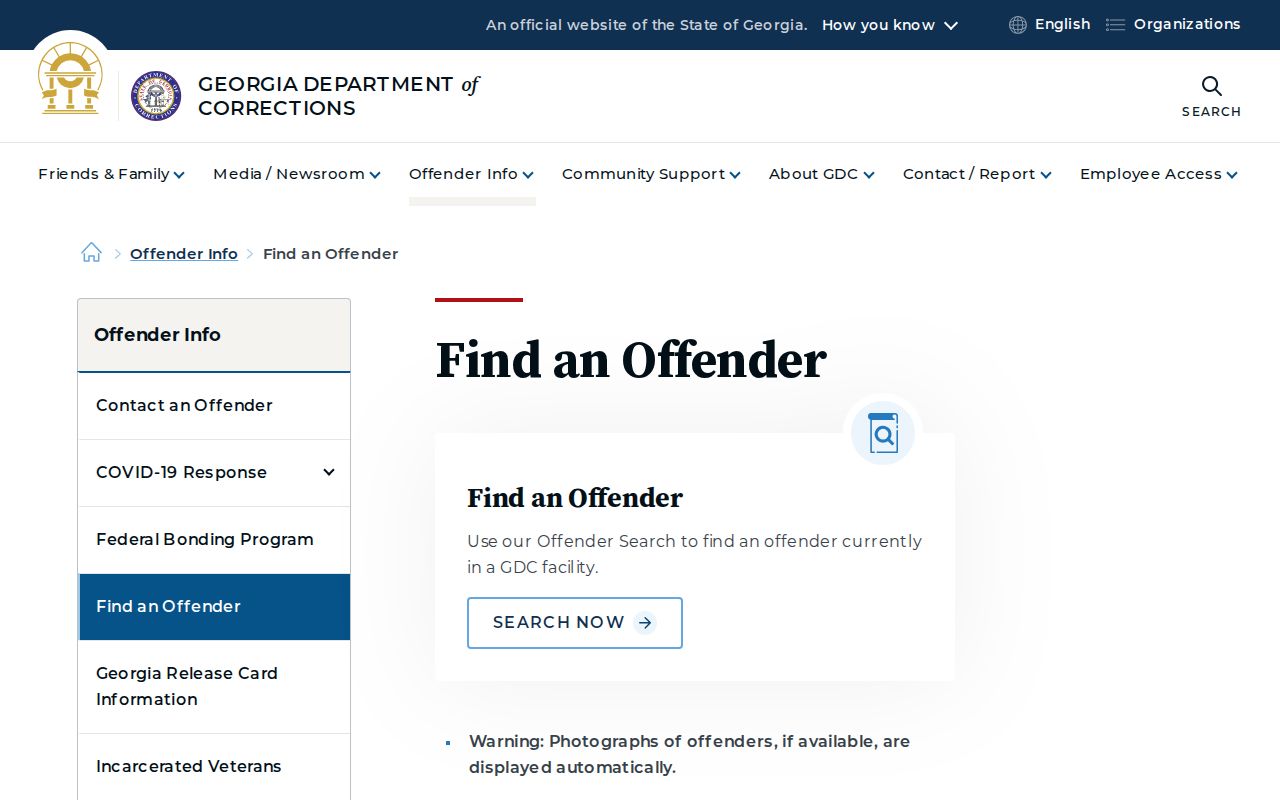
The state page identifies the GDC route, while the live record must be read by its displayed labels and verified when exact status matters.
| Possible field | Meaning |
|---|---|
| GDC ID | State offender identifier. |
| Current status or location | Reported state custody state. |
| Maximum Release Date | Sentence endpoint under the recorded calculation. |
| Tentative Parole Month | Month for final Board review, not guaranteed release. |
| Performance Incentive Credit Date | Earlier consideration date for an eligible inmate. |
| Actual release or discharge date | Recorded event after state custody ends. |
Crisp County TPM Release Meaning
The Georgia Parole Board defines TPM as Tentative Parole Month. It is when final review occurs and, if appropriate, when a parole release date may be set. A TPM can depend on good conduct and completion of required programs. Misconduct reports usually postpone or cancel it.
Most parole-eligible inmates are automatically considered, and the Board says most reach statutory eligibility after one-third of the sentence. Few are released at that first point. The Board may establish, deny, or reconsider a decision up to release. Eligibility is not approval, and a TPM is not an appointment to leave prison.
Crisp County PIC Credit Rules
O.C.G.A. section 42-5-101 authorizes GDC work incentive credits for eligible felony prisoners other than life sentences. Credits can reflect academic or vocational progress, satisfactory work, and compliance with behavior standards. GDC reports them to the Parole Board, which may consider them and may advance an established tentative parole date.
The GDC Performance Incentive Credit page describes this earned-credit system.
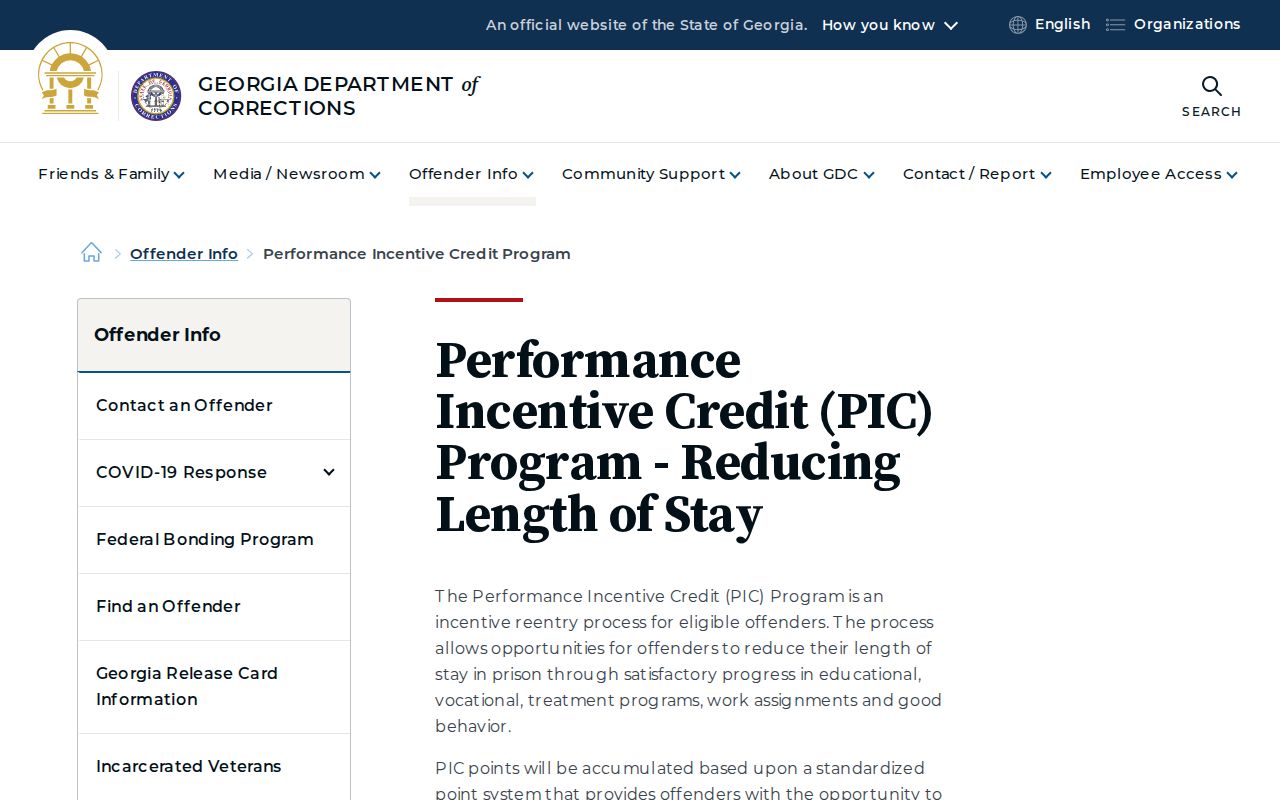
GDC states that one completed case-plan category can earn one point, one point equals one month of credit, and eligible offenders may receive up to 12 months. The Board controls eligibility and final parole use.
Crisp County Serious Felony Dates
Georgia should not be reduced to a universal 85-percent rule. O.C.G.A. section 17-10-6.1 applies mandatory-service and no-reduction rules to listed serious violent felonies. A covered first conviction with a non-life sentence generally must be served in full and cannot be cut by parole, early release, earned time, work release, or similar measures, subject to the statute's exact terms.
Life-sentence parole eligibility also depends on the crime date. The Board states that serious violent felony life sentences for crimes on or after July 1, 2006 require 30 years before eligibility. Earlier periods use different rules. Life without parole has no parole path. Read the sentence, offense, and date before applying a rule.
Crisp County Release Date Changes
Several documented factors can change a date or the time a release is completed. The same factor does not apply to every person.
| Factor | Possible effect |
|---|---|
| Bond or court order | Can create quick county release after processing. |
| Intoxication or safety hold | Can delay local release until safe. |
| Processing load and cooperation | Can change actual county departure time. |
| PIC or work incentive credits | May advance consideration for an eligible state inmate. |
| Misconduct | Can postpone or cancel a TPM. |
| Serious violent felony statute | Can bar ordinary sentence reductions. |
| Detainer or transfer | Can move the person to another custodian. |
| Sentence correction | Can alter time-served or release calculations. |
A detainer is a request or hold from another authority. It can cause the person to leave one facility and enter another, so the first release date is not a community-release date.
Crisp County Jail Versus Prison Dates
This is the key local computation quirk. Crisp County Jail timing comes from bond, court action, holds, and staff processing. GDC timing comes from the sentence, maximum date, parole review, earned credits, conduct, and statutes. Mixing the systems leads to false certainty.
A person sentenced in Crisp County may wait at the county jail for diagnostic transfer. The county can report transfer out. GDC then becomes the custodian and the better source for later prison release. The county record alone cannot calculate the later GDC discharge.
The GDC offender journey describes local jail as the sentencing phase before diagnostic assignment, followed by prison placement, reentry, and release. A delay between county transfer and a searchable state result can occur while the move is processed. Keep the county transfer date and later GDC admission, status, and release fields as separate events. That chain prevents a transfer from being mislabeled as the end of the state sentence.
Confirm Crisp County Actual Release
After the projected day passes, look for the actual event. Ask the jail for its release timestamp and type, or read GDC's status and actual release or discharge field. If parole began, compare the Parolee Database and DCS supervision route. If the person was transferred, follow the destination.
The Crisp County released-inmate record path combines jail, court, state, and federal sources. For exact reliance, GDC directs users to verify through written correspondence with Inmate Records and Information at P.O. Box 1529, Forsyth, GA 31029.
Note: A projected date becomes historical only when the responsible agency records the actual release or discharge.
Crisp County Court Date Records
The court file answers questions that a jail estimate cannot. A bond order may authorize pretrial release. A sentencing order defines confinement and probation. A sentence modification can change the term. A time-served order credits enough custody to complete a local sentence. A warrant or detainer can block departure even when another case permits release.
Crisp County Magistrate Court is relevant to warrants, first appearances, and early bond action. The Superior and Juvenile Courts Clerk keeps felony criminal filings and sentencing or disposition records. Ask for the exact order connected to the jail's release code. Online court access is a search aid, but sealed, restricted, juvenile, older, or locally held material may require direct clerk contact.
A court date is not a release date. It may only mark a hearing at which bond, sentence, or another issue will be considered. A sentence end date may not account for another hold. Pair the court order with jail confirmation before treating it as the day the person will leave.
Crisp County Detainers Change Dates
A detainer tells the current custodian that another authority may want the person. Crisp County can release someone from its own case yet transfer the person to another county, GDC, USMS, or ICE. The local release timestamp remains valid, but it does not mark freedom from all custody.
Ask which agency lodged the hold and whether the jail record identifies a destination. Then move to that agency's official source. GDC covers Georgia prison custody. BOP covers federal prisoners after commitment. ICE covers immigration detention. USMS manages many federal pretrial prisoners and transports but does not publish a county-style projected release list.
Crisp County Date Verification Record
Save the person's identifiers, custody system, exact field label, date checked, sentence or case number, and source agency. Add the court order or written response when available. That record shows whether a later change came from a new decision or an earlier misunderstanding.
Do not replace formal terms with a phrase that changes their meaning. Maximum release, TPM, PIC date, eligibility date, county transfer, and actual discharge are distinct. A clear timeline is more useful than one unsupported date.