
Georgia Parole Review Process
The Board describes parole consideration as automatic for eligible state prisoners rather than an application that guarantees release. Staff review the sentence, offense, institutional history, and other case material. The Georgia parole guidelines use an offense-severity level and a risk-to-reoffend score to produce a recommendation. Board members retain decision authority, so the guideline result is not itself a release order.
For many parole-eligible sentences, consideration can begin after one-third of the term. That general rule has important limits. Some serious violent felony sentences and life sentences follow different statutory rules, and eligibility can depend on the crime date. The inmate's court sentence and GDC record must be read before applying a broad eligibility statement to a Crisp County case.
Pre-parole investigation can also occur before a final decision. The Board may examine a proposed residence and release plan. A favorable review step, investigation, or guideline recommendation still does not establish that prison custody ended. Only the later Board action and GDC release status confirm the completed parole release.
Georgia Parole Decision Changes
A tentative decision can change before the person leaves prison. The Board states that a TPM may depend on good conduct and completion of required programs. Misconduct reports can postpone or cancel release. A new court order, recalculated sentence, statutory restriction, or unresolved hold can also affect the practical custody timeline even when an earlier month appeared in the lookup.
Read public records in chronological order. First identify the Crisp County sentence. Then record the GDC status and sentence fields. Next capture the TPM label and date from the Board tool. Finally, check for an actual parole release date and a post-release parolee entry. This sequence separates a forecast from the completed event.
When the lookup changes, retain the inmate identifier and the date each result was checked. Contact the Board about its parole action and GDC about the prison status. Neither agency should be asked to certify a record created by the other.
Crisp Parole Meeting Records
The Board's press-release page is the documented public source for monthly meeting schedules, notices, agendas, and cancellations. Those materials give context for public Board business but are not a person-by-person parole decision database. A meeting notice should not be read as evidence that a named Crisp County offender received release approval.
For an individual still incarcerated, use the TPM lookup and GDC offender record. For someone believed to be in the community, use the Parolee Database and DCS office routing. Board meeting material is supplemental. It can show when public meetings were planned or changed, while the person-specific tools answer the release-status question.
The Fitzgerald Field Office remains the regional supervision route after release. It serves Crisp County despite being outside Cordele. Calling the county jail about parole reporting can therefore lead to the wrong office because jail authority ended before DCS supervision began.
Crisp Parole Identity Checks
Use a GDC identifier whenever possible. Names alone can match more than one Georgia offender, and a Crisp County conviction may not be the only case shown. Compare the offense, sentence, status, and release details before treating a parolee result as the correct person. If key facts conflict, ask the Board or GDC to verify its own record.
Georgia Parole Release Role
The Board decides parole for eligible Georgia state prisoners. It does not operate the Crisp County Jail, make local bond decisions, or supervise felony probation. A person released from the county jail on bond, time served, or dismissal will not appear as a parolee unless a separate state sentence placed that person on parole.
For a state prisoner, the Board's pre-release tool is the Inmate TPM Lookup. TPM means Tentative Parole Month. It marks a planned point for final review, not an assured release. For someone already released on parole, the Parolee Database is the better record source. DCS then handles field supervision.
| Question | Correct source |
|---|---|
| Is a state prisoner under parole review? | Inmate TPM Lookup |
| Was parole actually granted? | Board decision and GDC status |
| Is a released person a parolee? | Parolee Database |
| Where should a Crisp parolee report? | DCS Fitzgerald Field Office |
| Why did a local detainee bond out? | Crisp County court and jail |
Check Georgia Parole Release
The State Board home page links both official tools. Start by deciding whether the person is still incarcerated or already in the community. Then use the person's state identifier where possible. Similar names can lead to the wrong record.
- Use Inmate TPM Lookup for an incarcerated GDC offender with a possible parole review date.
- Read the displayed month as tentative. Check GDC status before concluding that release occurred.
- Use the Parolee Database for a person believed to have left prison on parole.
- Compare name, identifier, county or location details, and supervision status.
- Contact DCS for local reporting-office routing, not for the original parole decision.
Georgia Tentative Parole Month
The Board's TPM explanation says the tentative month is when final review will be completed and a release date may be set if appropriate. Good conduct or program completion may be required. Misconduct reports can cause the Board to postpone or cancel the planned release.
Most parole-eligible inmates may be considered after one-third of the sentence, but that general point has exceptions. Serious violent felony rules and life sentences depend on the offense and relevant crime date. The Board also uses guidelines that consider offense severity and a risk score to make a recommendation. A recommendation still does not create a right to release.
- Eligibility
- The point when parole consideration may occur.
- TPM
- A tentative month for final review.
- Parole release date
- A date set after approval and required review.
- Discharge
- The later end of parole supervision.
Georgia Parole Board Contact
Contact the Board about parole decisions, TPM records, or the parolee database. Use DCS for day-to-day community supervision routing. The two agencies work in the same release sequence but have different duties.
Georgia State Board of Pardons and Paroles2 Martin Luther King Jr. Drive SE
Suite 430, Balcony Level, West Tower
Atlanta, GA 30334
Primary: (404) 656-4661
Public information: (404) 657-9450
The official Board home page is also represented by the matching manifest image below.
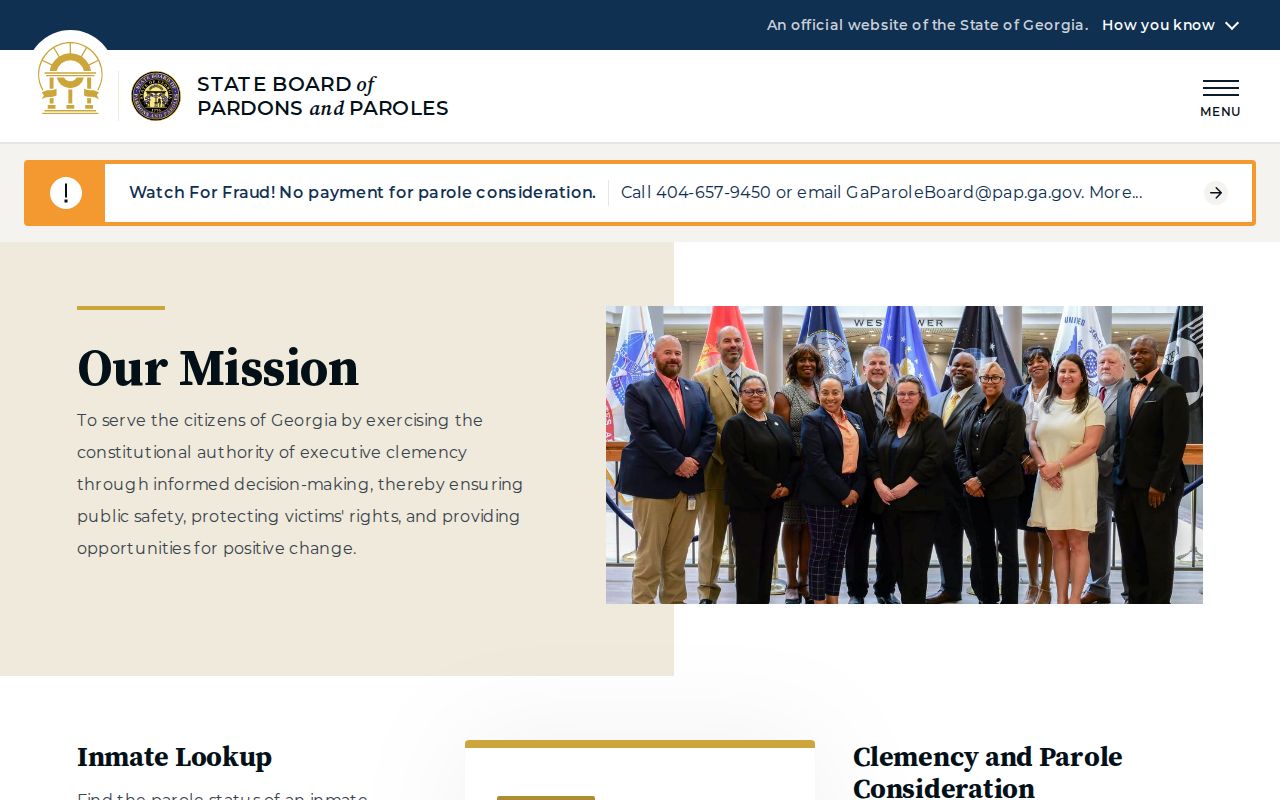
For a full custody chain, compare the Board record with GDC status and the Crisp County sentence. The Crisp County release search separates local jail, state prison, and supervision sources.
Crisp County Parole Supervision
Once a state prisoner leaves on parole, the Board's release decision is followed by DCS field supervision. DCS identifies the Fitzgerald Field Office as serving Crisp, Ben Hill, Dooly, Wilcox, and the Cordele Circuit. That office, not the jail, is the local route for where a Crisp County parolee reports.
Felony probationers may also report through DCS, but probation is imposed by a court rather than granted by the Parole Board. The Crisp County sentencing order explains probation terms. A person can be on probation without ever serving a state prison sentence, so absence from the parolee database does not disprove community supervision.
Parole and probation can both include rules and reporting duties. A suspected violation can lead to a warrant or revocation process, but a missed appointment alone should not be treated as proof of arrest. Confirm current status with the responsible agency and the court record.
Georgia Parole Record Trail
A complete Crisp County parole timeline combines several records. The Superior Court sentence establishes the prison term. GDC records state custody, offense and sentence data, and release status. The Board records consideration and parole action. The Parolee Database shows post-release parole information. DCS routes the person to the office responsible for supervision.
Read each date by label. Sentence date, eligibility date, TPM, parole release date, and supervision discharge date are not interchangeable. If an online tool is unclear, contact the office that made the record. GDC also asks users to verify offender information in writing through Inmate Records and Information.
Note: A person can leave Crisp County Jail for GDC long before the later state parole release occurs.
Georgia Parole Status Limits
The Board tools do not provide a county jail recent-release feed. They also do not cover federal supervised release, immigration custody, or ordinary misdemeanor probation. VINE can notify about a custody change, but it does not replace a parole decision or supervision record.
Online parole information may lag a same-day event. Names may be similar, and some details may be withheld or unavailable. Use state identifiers and sentence facts to confirm identity. When release timing matters, compare the Board's tentative information with the actual GDC status.
A parole record answers whether state prison release occurred under parole authority. It should not be stretched to explain a Crisp County bond release or a transfer that never became parole.